Kempe Gowda I’s mud fort
The early fort formed part of the foundation of the settlement that grew into modern Bengaluru under the wider Vijayanagara political world.
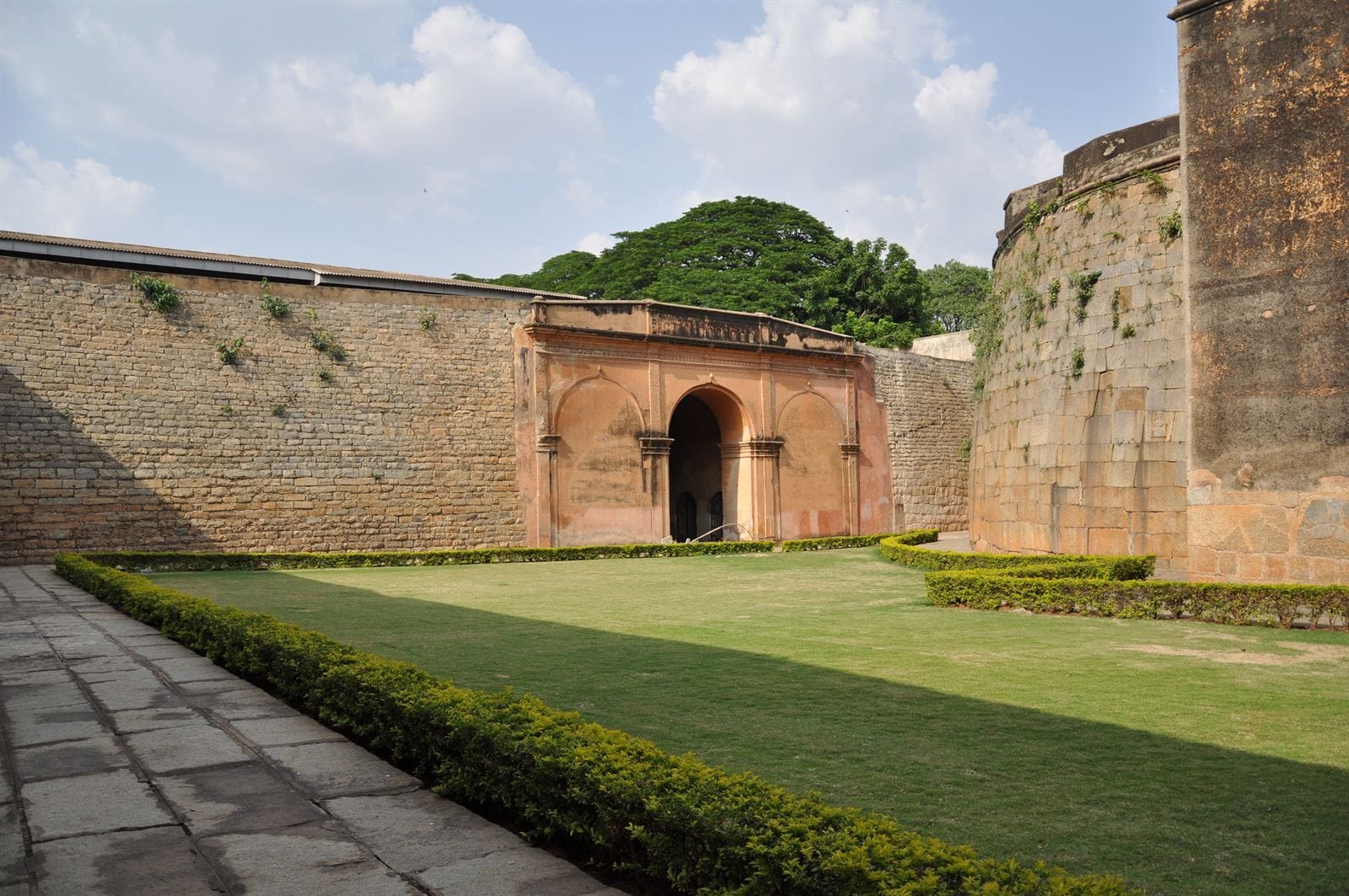
Centrally protected ASI monument · N-KA-B1
From Kempe Gowda I’s 1537 mud fort to Hyder Ali’s stone defences, this surviving gateway — also known as Bangalore Fort — keeps a physical link to the making of Bengaluru’s old city.
Bengaluru Fort (ಬೆಂಗಳೂರು ಕೋಟೆ) is the centrally protected surviving gateway of the fort Kempe Gowda built in 1537, standing in the heart of old Bengaluru, Karnataka, India and listed by the Archaeological Survey of India as “Old Dungeon Fort and Gates”.
THE CITY'S EARLY LAYERS
Bengaluru Urban District Administration records that Kempe Gowda built a mud fort in 1537 and laid the foundation of modern Bengaluru. The Archaeological Survey of India lists the surviving protected monument as “Old Dungeon Fort and Gates”.
The early fort formed part of the foundation of the settlement that grew into modern Bengaluru under the wider Vijayanagara political world.
Hyder Ali reinforced the defensive enclosure in stone. Bengaluru remained an important military centre under Tipu Sultan.
British forces captured Bengaluru Fort during the 1791 campaign. Much of the larger fortification later disappeared, leaving the protected gateway, walls and bastion elements visible today.
PRACTICAL INFORMATION
Most current visitor listings show 8:30am–5:30pm daily. Holiday or maintenance closures can change; the notice at the monument takes precedence.
Fort only: around 45–75 minutes. Allow 3–4 hours for a broader old-city heritage walk.
Recent visitor listings commonly report free entry. Verify current admission rules on the ASI or on-site notice before travel rather than relying on an old fee figure.
Early morning is good for walking and photography. October–February is generally Bengaluru’s most comfortable period for outdoor sightseeing.
DEFENSIVE DETAILS IN STONE AND TIMBER
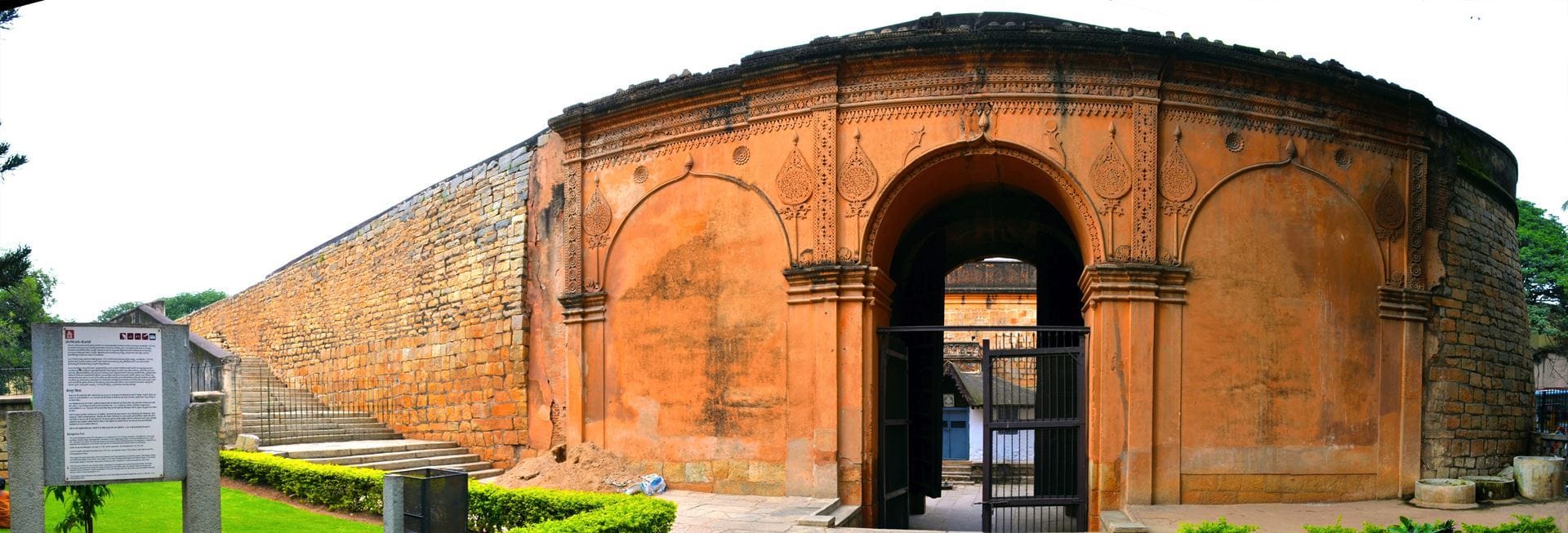
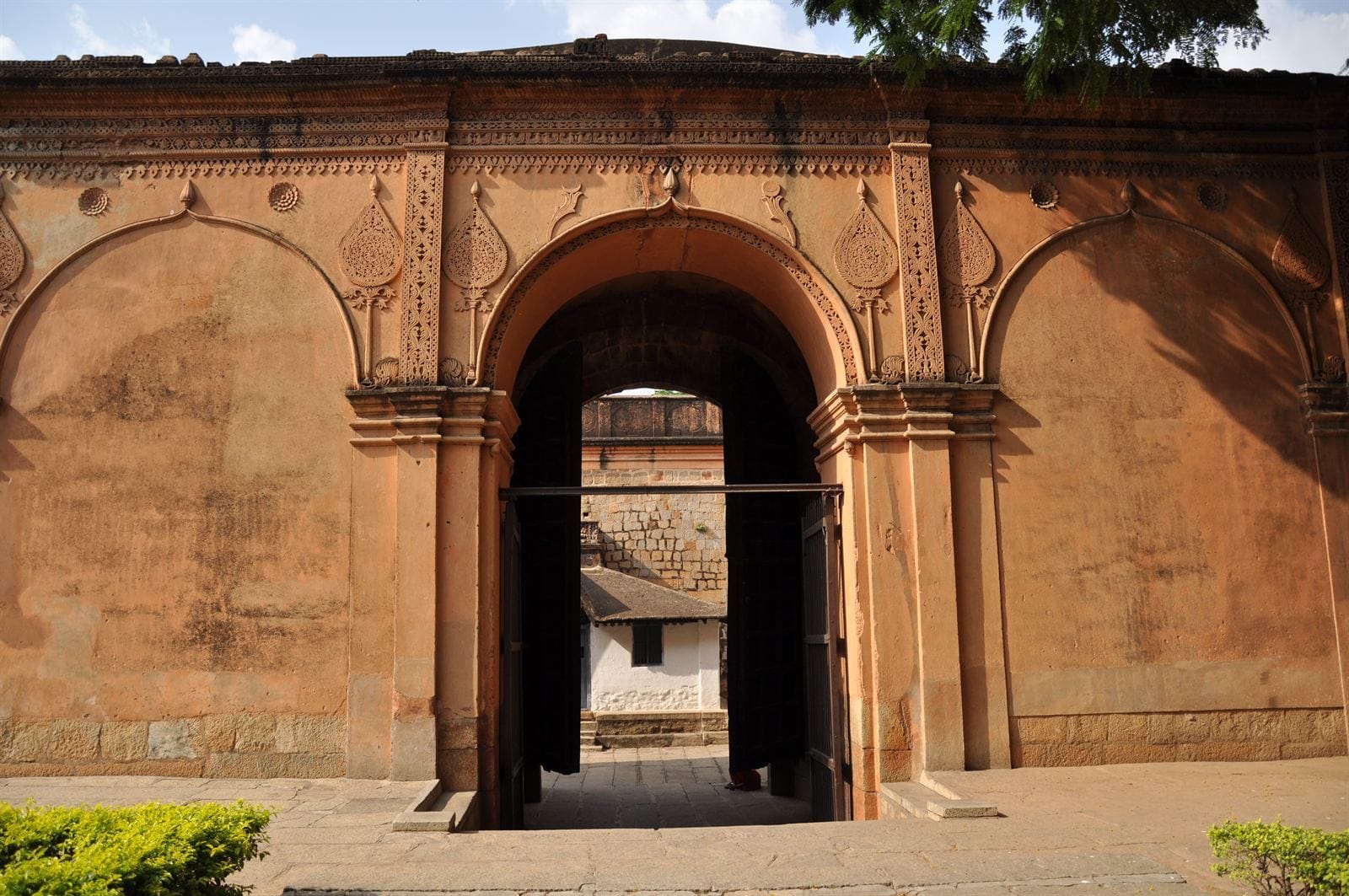
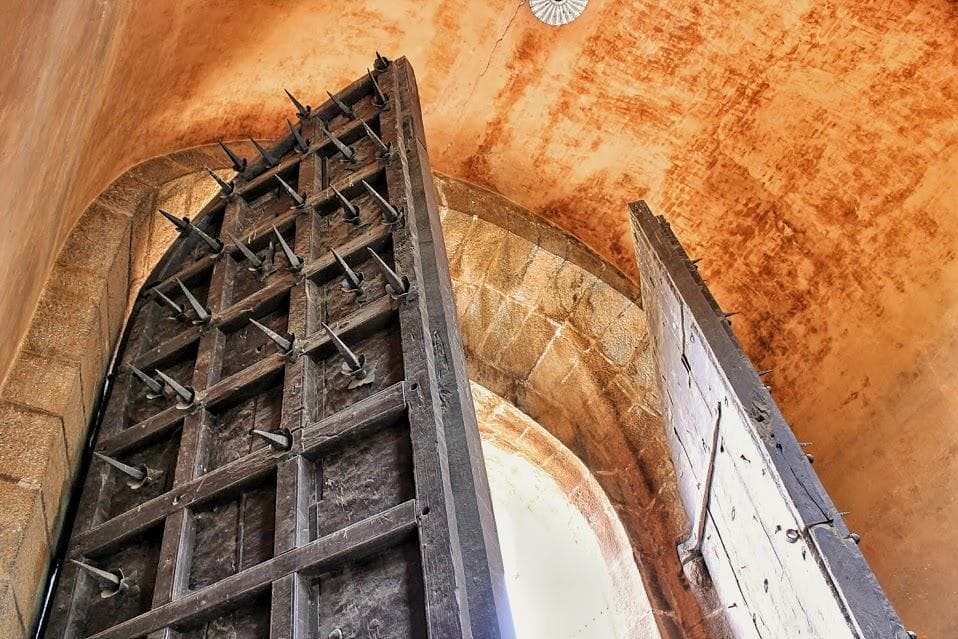
The surviving fabric shows thick masonry, curved bastion forms, a recessed gateway sequence and heavy timber doors. Iron spikes on the gate are a vivid reminder of defensive architecture designed for an age of elephant assaults.
STORIES & LEGENDS
A fort is more than walls: names, rumours, sieges and lost gates all become part of the place. Below we separate folk memory from documented turning points so the history stays as honest as it is vivid.
Popular memory says a Hoysala king, lost while hunting and hungry, was served boiled beans by an old woman, and grateful he called the place “Benda-kaal-ooru” (town of boiled beans) — which slowly became Bengaluru. The name already appears in a stone inscription near Begur dating to 890 CE, so the beans story is best read as folk memory rather than a proven etymology.
Kempe Gowda I chose the site and laid out the settlement that became Bengaluru. As later retellings record, the foundation ground was ritually ploughed with four pairs of white oxen in four directions. Old descriptions speak of a moat and gates around the mud fort, a layout that a busy market town soon outgrew.
Hyder Ali rebuilt the mud defences in stone around 1761. The surviving gateway traditionally known as the Delhi Gate and the curved bastion elements date from this stone phase. Under Tipu Sultan the stronghold remained one of Mysore’s key military and arsenal centres before the wars with the British.
During the Third Anglo-Mysore War, British forces under Lord Cornwallis captured Bengaluru Fort on 21 March 1791 after a short siege. The fort never recovered its old military role; through the nineteenth and into the twentieth century its walls, gates and ditches were progressively dismantled as roads and buildings replaced ramparts.
The surviving fragment is protected by the Archaeological Survey of India under the name “Old Dungeon Fort and Gates”. The word “dungeon” puzzles visitors; some colonial-period descriptions suggest the gate complex was used for detention, but written records are limited. Urban digs add another layer of memory: during Namma Metro work in the old city around 2012, iron cannons and cannonballs reportedly linked to the fort’s Tipu-era military history were unearthed, a reminder of how much history still lies beneath the streets.
GETTING HERE
Reaching the fort is straightforward once you are in Bengaluru. The old city is dense, so the last mile is easiest by Metro plus a short walk or auto. Below are practical routes from the airport, the stations and within the city.
Airport to city
KIA lies about 35–40 km north of the old city. The airport shuttle (BMTC Vayu Vajra) and app-based taxis both run into the city centre; travel time is typically 60–90 minutes depending on traffic.
Reach the old-city core
Alight near the city railway station / Majestic area, then take the Metro (K.R. Market or Chickpet side) or a short auto-rickshaw ride to the fort.
Tip
For a midday arrival, allow extra time — the airport road and the approach to the old city get congested.
Krantivira Sangolli Rayanna (Bengaluru City)
The main station sits beside the Majestic interchange. From here, the Metro or a 15–25 minute auto/taxi ride reaches the fort.
Yesvantpur / Cantonment
Both connect to the Metro network or app taxis; plan the last leg the same way as the city-station route.
Nearest stations
K.R. Market and Chickpet are the most useful stations for the fort side of the old city.
Last stretch
From either station, the fort is a short walk or a brief auto-rickshaw ride through the market streets. Check the current official Metro map before you travel, as access points can change.
Why it helps
Metro avoids old-city traffic and drops you within walking distance of K.R. Market, the palace and the temple cluster.
Key stops
Many city routes serve K.R. Market, Kalasipalya and City Market, all close to the fort.
Practical note
Buses are inexpensive and frequent but the stops are busy; keep tickets and belongings secure.
Use for the final leg
An auto-rickshaw or app taxi is ideal from a Metro station, bus stop or railway station to the fort gate.
Fare
Confirm the meter or the app estimate before you start. Short old-city hops are usually modest, but agree first to avoid surprises.
Drop-off
Ask to be set down as close to the gateway as traffic allows, then walk the last stretch on the pavement.
Quick tip: Travel light, keep valuables secure in crowded markets, and avoid the worst of the rush by starting early.
VISITOR FACILITIES
Facility TYPES only — no names, no brands, no endorsements. Availability, prices and quality change over time, so always confirm on the spot during your visit.
No reliable public toilet is guaranteed inside the monument grounds. Public conveniences around K.R. Market and City Market change over time; check condition yourself and plan ahead.
Arranged drinking water is not assured at the monument. Carry your own bottle; shops around the market area sell water.
There is no large dedicated tourist car park at the fort. Lawful paid parking exists on surrounding market streets; public transport, or a two-wheeler with local parking, is usually simpler. Keep the gate approaches clear.
K.R. Market and Chickpet have many small vegetarian darshini-style eateries serving idli, dosa, vada, khara bath and filter coffee, plus non-vegetarian options in the area. Judge hygiene, posted prices and your own dietary needs.
K.R. Market is a working produce market (fruit, vegetables, flowers) and the surrounding pete areas have small shops for everyday needs. Useful for supplies; not a curated souvenir market.
Budget hotels, lodges, guesthouses and hostels exist around the Majestic / Gandhinagar and City Market side of the city; mid-range and premium options concentrate nearer the central business district. Compare distance and recent reviews when booking.
Fuel stations are located on the main arterial roads around the old city. Public EV charging in Bengaluru is expanding but is not guaranteed beside the fort; check charging apps for live availability before driving in.
Bank ATMs and pharmacies are found around the market area and main roads. Small traders and street vendors may prefer cash, so keep small notes handy as well as a card.
The monument is an open urban site on a busy pavement; ground surfaces are uneven. Comfortable shoes, a hat and sun protection help. If you need mobility assistance, plan the short walk from drop-off points carefully.
PLAN FOR THE WEATHER
The fort is an open-air site, so the weather shapes your visit. The panel below shows current conditions and a seven-day outlook that refreshes automatically — and turns the forecast into plain advice: do you need an umbrella today?
Cooler mornings and evenings suit outdoor walking. Mornings at the fort are usually calm before the market district gets busy.
Midday heat is strongest. Plan for the first hour of the morning or after about 4pm; carry water, a hat and sun protection.
Bengaluru rains can arrive suddenly. Keep an umbrella or light rainwear, allow extra time for slippery, busy streets, and check the forecast each morning.
CURRENT CONDITIONS
7-DAY OUTLOOK
Forecasts are indicative and can differ from official advisories. For warnings and alerts, consult the India Meteorological Department.
WHEN TO VISIT
Bengaluru sits at about 900 m elevation, which keeps its climate milder than most Indian cities at this latitude. The table below summarises a typical year so you can time your visit and pack sensibly.
| Season | Typical weather | Best for | What to carry | Note |
|---|---|---|---|---|
| Dec–Feb · Cool, pleasant | Mild days (≈20–28°C), cool mornings and evenings. | The most comfortable window for walking the old city and photography. | A light layer for early morning; water. | Clearest light and the calmest streets before the market wakes. |
| Mar–May · Warm | Hot afternoons (≈24–35°C), occasional pre-monsoon showers. | Early-morning visits; indoor palace and temple stops at midday. | Water, hat, sun protection. | Heat builds after 11am — plan the fort for the first hour of daylight. |
| Jun–Sep · Monsoon | Frequent showers (≈20–28°C), humid, sudden rain. | Short, flexible visits; green surroundings at Lalbagh. | Umbrella / rainwear; slip-resistant shoes. | Old-city pavements get wet and busy — allow extra time. |
| Oct–Nov · Post-monsoon | Settling weather (≈21–30°C), festive season. | Strong all-round window; combine with city festivals. | Light daypack; water. | Dasara and Diwali periods bring crowds and closures — check locally. |
Long-period (30-year) climate normals for Bengaluru are compiled by the India Meteorological Department (IMD). The city receives most of its rain from the south-west monsoon (roughly June to September); the cool, dry months are generally the most comfortable for heritage walking. Bengaluru’s drinking water is drawn largely from the Cauvery river system, so mindful use matters even in a busy tourist district. Green lungs such as Lalbagh Botanical Garden and Cubbon Park, both begun in the 18th century, support birds and urban biodiversity; the fort itself is an urban monument, so expect city life rather than wilderness. We present this as general background, not as an official forecast — always check current conditions before you travel.
PLAN YOUR ROUTE
Different travellers want different things. Use the routes below to match the fort and its neighbours to your group and your available time.
Relaxed pace, shade and nearby comforts.
Golden-hour light and architectural detail.
Shorter distances, drop-off and rest points.
Fort gateway and walls (45–75 min) → Tipu Sultan’s Summer Palace (45 min) → K.R. Market walk and a food stop (60–90 min). A compact old-city heritage loop.
Add the Kote Venkataramana Temple and Lalbagh Botanical Garden to the half-day loop, with a longer market and food exploration. Pace it with a midday break during warm months.
SCIENCE & RESPONSIBILITY
A visit is also a small act of stewardship. These notes help keep the monument, the neighbourhood and its environment healthy for the next visitor.
The surviving gateway and walls are a centrally protected monument under the Archaeological Survey of India. Do not climb on, lean against or mark the masonry; follow on-site signage and barriers.
Carry a refillable water bottle and take your litter with you. The old city streets are busy; keeping them clean protects both heritage and daily life.
Bengaluru’s water comes largely from the Cauvery system. Use water sparingly at public taps and facilities, and report leaks rather than wasting supply.
Nearby Lalbagh and Cubbon Park are shared urban habitats for birds and small wildlife. Observe without feeding or disturbing; stay on paths in garden areas.
Casual visitor photography is fine. For tripods, drones or any commercial shoot, check current ASI and local rules first, and keep pavements clear for others.
The market area is crowded and the pavement uneven. Watch your belongings, use safe crossings, and avoid peak heat — hydrate and rest in shade.
NEARBY SIGHTS
When visiting Bengaluru Fort, you can easily explore surrounding historic landmarks, including Tipu Sultan’s Summer Palace and the Kote Venkataramana Swamy Temple — all within a short walk or ride in the same old-city area.
A separate centrally protected monument with timber columns and arches. Do not confuse the palace with Bengaluru Fort itself.
A historic temple built in 1689 in the period of Chikkadevaraja Wodeyar, adding a religious and architectural layer to the old fort area.
A busy old Bengaluru market known for flowers, fruit, vegetables and daily trade, especially lively in the morning.
A historic garden begun under Hyder Ali and expanded in Tipu Sultan’s era, useful as a green counterpoint after the fort.
NEARBY FOOD
These are contextual examples, not paid rankings or endorsements.
A long-running South Indian vegetarian institution on Lalbagh Road, associated with rava idli, dosa and bisibele bath.
Official siteA traditional Gandhi Bazaar breakfast stop widely known for masala dosa and old-Bengaluru dining culture.
Official siteK.R. Market and Chickpet have many small places serving idli, vada, dosa, khara bath and filter coffee. Check hygiene, posted prices and allergy needs yourself.
LOCATION & DIRECTIONS
Address: XH7G+49C, Krishna Rajendra Rd, New Tharagupet, Bengaluru, Karnataka 560002, India. For official updates and regional tourism information, visit the Karnataka Tourism Department – Bengaluru page and the Incredible India – Karnataka page.
FREQUENTLY ASKED QUESTIONS
Kempe Gowda I established the early mud fort in 1537. Hyder Ali later strengthened the fort in stone around 1761.
About 45–75 minutes is usually enough for the surviving gateway, walls, bastions and courtyard. Allow 3–4 hours if you combine it with nearby old-Bengaluru heritage sites.
Recent visitor listings commonly report free entry, but operating rules can change. Treat the notice at the monument or current Archaeological Survey of India information as authoritative on the day you visit.
Early morning is usually the easiest time for walking and photography and avoids some of the midday heat and old-city traffic. Bengaluru is generally pleasant for outdoor sightseeing from October to February.
K.R. Market and Chickpet are practical metro approaches for this part of the old city. Check the current Namma Metro map before travelling because access arrangements can change.
The fort is in a dense market district. Do not assume a large dedicated tourist car park is available at the monument; public transport or a lawful paid parking facility is usually simpler.
No reliable public toilets or eateries are guaranteed inside the monument grounds. The K.R. Market–Chickpet area offers public conveniences, small eateries, shops and ATMs; judge hygiene, prices and availability on the spot.
As an open-air monument, casual visitor photography is generally fine. For commercial filming, drones or special equipment, check the current Archaeological Survey of India or on-site guidance, and avoid blocking the busy pavement.
No — they are separate centrally protected monuments. The Summer Palace lies a short distance away in the old city; plan it as a distinct visit rather than part of the fort.
SOURCES & IMAGE RIGHTS
The fort’s identity, protected status, location and history are tied to public authority sources. Photographs are stored locally rather than hotlinked at runtime, and photographer/licence credits are retained here.


